
'It has got to be the biggest error in aviation. If it is the biggest error, then all those individuals in positions of power should be removed because they have caused the biggest meltdown in Indian aviation history.'

Government needs to rationalise taxation policies to promote investments through stock markets, says BSE chief.

India, the world's fourth largest economy, is set to maintain the 'goldilocks' phase with tailwinds of good growth, low inflation and robust banking performance as well as reform initiatives poised to sustain the economic pace witnessed during 2025.
India VIX has been mirroring the CBOE Volatility Index.

Ajit Mishra, vice president, Research, Religare Broking, answers your queries.
.jpg)
The broader consensus was that the Fed would cut the monthly stimulus of $85 billion by $10-15 billion.
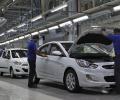
Multiple tailwinds for the automobile sector, including a cut in goods and services tax (GST) rates, are keeping analysts bullish on auto stocks from a long-term perspective, even as they see the rally running its course in the near term.

From the 30-Sensex firms, HDFC Bank, Infosys, HCL Tech, Bajaj Finance, Tata Consultancy Services and Reliance Industries were among the biggest laggards. In contrast, Bharat Electronics, Hindustan Unilever, Tata Steel and UltraTech Cement were among the gainers.

From the 30-Sensex firms, NTPC, ICICI Bank, Adani Ports, Bharti Airtel, Sun Pharma and Bajaj Finance were among the biggest laggards. However, Asian Paints, HCL Tech, Bharat Electronics and Reliance Industries were among the gainers.

The Securities and Exchange Board of India (Sebi) has granted a no-objection certificate (NOC) to the National Stock Exchange of India (NSE), paving the way for the country's biggest exchange - currently valued at 5 trillion in the unlisted market - to file draft documents for its long-awaited initial public offering (IPO).

In the absence of major domestic events, equity markets will be driven by global trends, foreign fund flows and movement in the Brent crude oil, analysts said. The major global events this week are the European Central Bank interest rate decision and China's inflation rate, they added. "Indian equity markets are outperforming most of their global peers and trying to show resilience despite weak global cues.

Movement in the equity market this week will be guided by a host of macroeconomic data announcements, global trends and trading activity of foreign investors, analysts said. Stocks markets concluded the last week on a subdued note, as investors grappled with global uncertainties.

'Is it advisable to have more number of scrips in small quantities or a few scrips in big quantities?'

Companies' rent and lease expenses have seen a significant decline relative to the money they make since the pandemic.

According to Standard & Poor's index services monthly global stock market review, global equity markets after three months of consecutive gains declined 0.58 per cent in June with emerging markets giving negative returns of 1.45 per cent. Indian stock markets gave the highest returns of as much as 60.6 per cent in the three months period between April to June, despite witnessing a loss of 2.17 per cent in the month of June.

From the Sensex firms, Trent, Tech Mahindra, Bajaj Finserv, Reliance Industries, Infosys, Kotak Mahindra Bank, HCL Technologies, and NTPC were among the biggest laggards. However, Eternal, Tata Motors, Sun Pharma, Tata Steel, and Titan were the gainers.

From the 30-Sensex firms, Trent, Larsen & Toubro, Reliance Industries, InterGlobe Aviation, Maruti, ITC, Adani Ports and Bharat Electronics were among the biggest laggards. In contrast, Eternal, ICICI Bank, Tech Mahindra, State Bank of India and Tata Consultancy Services were among the gainers.
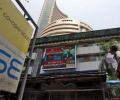
The stock markets, which had opened in the green on rate cut hopes, tumbled after the monetary policy announcement.

U K Sinha said the equity market also helps in the growth of the Indian economy as the money invested in equities is utilised for infrastructure-building

Benchmark equity indices Sensex and Nifty rebounded on Thursday after three sessions of losses, tracking gains in global markets after US President Donald Trump struck a conciliatory tone on Greenland. In a volatile session, the 30-share BSE Sensex climbed 397.74 points, or 0.49 per cent, to close at 82,307.37.
From the Sensex pack, Bharti Airtel, Asian Paints, Infosys, Bharat Electronics, Tech Mahindra and Eternal were major laggards. However, Maruti, Tata Steel, Bajaj Finance, Bajaj Finserv, Trent and Tata Consultancy Services were among the gainers.

Indian stock market investors are laughing all the way to the bank with the total market value of domestic listed companies soaring to a record $1.5 trillion on a day when the benchmark BSE Sensex ended at a new closing high of 25,396.46.

The rupee breached 90-levels against the greenback for the first time on Wednesday, falling 6 paise to 90.02 in early trade, as banks kept buying US dollars at higher levels and FII outflows continued.
Notwithstanding the stock market in 2014 logging one of the worst New Year starts since 1996, the year heralds the beginning of a bull cycle in India and the Sensex may scale the 24,000 peak by December, Deutsche Equities said.


Gold exchange-traded funds (ETFs) have further lost favour among Indian investors.

Eyewear major Lenskart is gearing up to launch its first pair of AI-powered smart glasses by the end of December, marking a step towards positioning itself as a technology-led lifestyle brand, according to people familiar with the matter.

The Indian government has directed oil refineries to increase LPG production to ensure a stable supply of domestic cooking gas, amidst concerns over potential disruptions from the escalating Middle East conflict and its impact on imports.

From the Sensex firms, Bajaj Finance, Infosys, Hindustan Unilever, ICICI Bank, HCL Tech, UltraTech Cement, Bajaj Finserv, State Bank of India, Tata Consultancy Services, Reliance Industries, Axis Bank and Larsen & Toubro were among the major gainers. However, Trent, Tata Steel, Tech Mahindra and Maruti were among the laggards.
Led by the country's biggest lender State Bank of India (SBI), public sector banks logged a record cumulative profit of Rs 52,603 crore in the third quarter of the current fiscal, reflecting an 18 per cent year-on-year growth.

Raiwalys in existential crisis but no stock market route: Prabhu.

Investors and startup executives are calling for extending the period for an entity to be recognised as a startup from 10 to 15 years for deep-tech companies.

Eighteen new-age technology firms went public during the year, a near triple increase from the five firms that debuted in 2023 and 38 per cent more than 2024's tally of 13.

After withdrawing money on a net basis for the past three months, foreign portfolio investors (FPIs) have turned buyers with a Rs 6,480 crore investment in October so far, driven by strong macroeconomic factors.

The Congress party has strongly criticized the Union Budget, calling it 'lacklustre' and 'disappointing,' claiming it fails to address the needs of farmers, unemployed youth, and other key sectors.

Indian stocks are becoming "less interesting" as their valuation vis--vis other markets in the Asian region have declined considerably, Swiss banking major Credit Suisse said in a report.

Indian Oil Corporation's (IOC's) Q2FY26 operating profit of 14,600 crore beat Street estimates and was up 16 per cent on a sequential basis. It surged 287 per cent over the year-ago quarter on account of an improved refining performance.

Sebi has put in place a strong deterrence to check any misuse of participatory notes.

Billionbrains Garage Ventures, the parent company of stock broking firm Groww, on Thursday fixed a price band of Rs 95-100 per share for its upcoming Initial Public Offering (IPO), targeting a valuation of over Rs 61,700 crore (about $7 billion). The company's Rs 6,632 crore IPO would open for public subscription on November 4 and conclude on November 7, according to a public announcement.

Indian equity benchmarks rose nearly 2 per cent on Thursday, capping a truncated trading week with their strongest weekly performance in over four years. The rally was sparked by renewed risk-on sentiment following progress in trade negotiations and expanded tariff exemptions.
